Adapted Tango Program
Tango Therapy in DC
If you’ve read the recent New York Times article about “tango therapy,” you know that dancing tango is helping patients with Parkinson’s disease in Argentina. DC nonprofit Tango Mercurio is bringing that same approach to such patients here in Washington through its Adapted Tango Program. Launched in 2025, the program provides the scientifically proven therapeutic benefits of partnered and improvised social dance to people with Parkinson’s disease and other movement disorders through a safe, interesting, and fun adaptation of traditional Argentine tango.
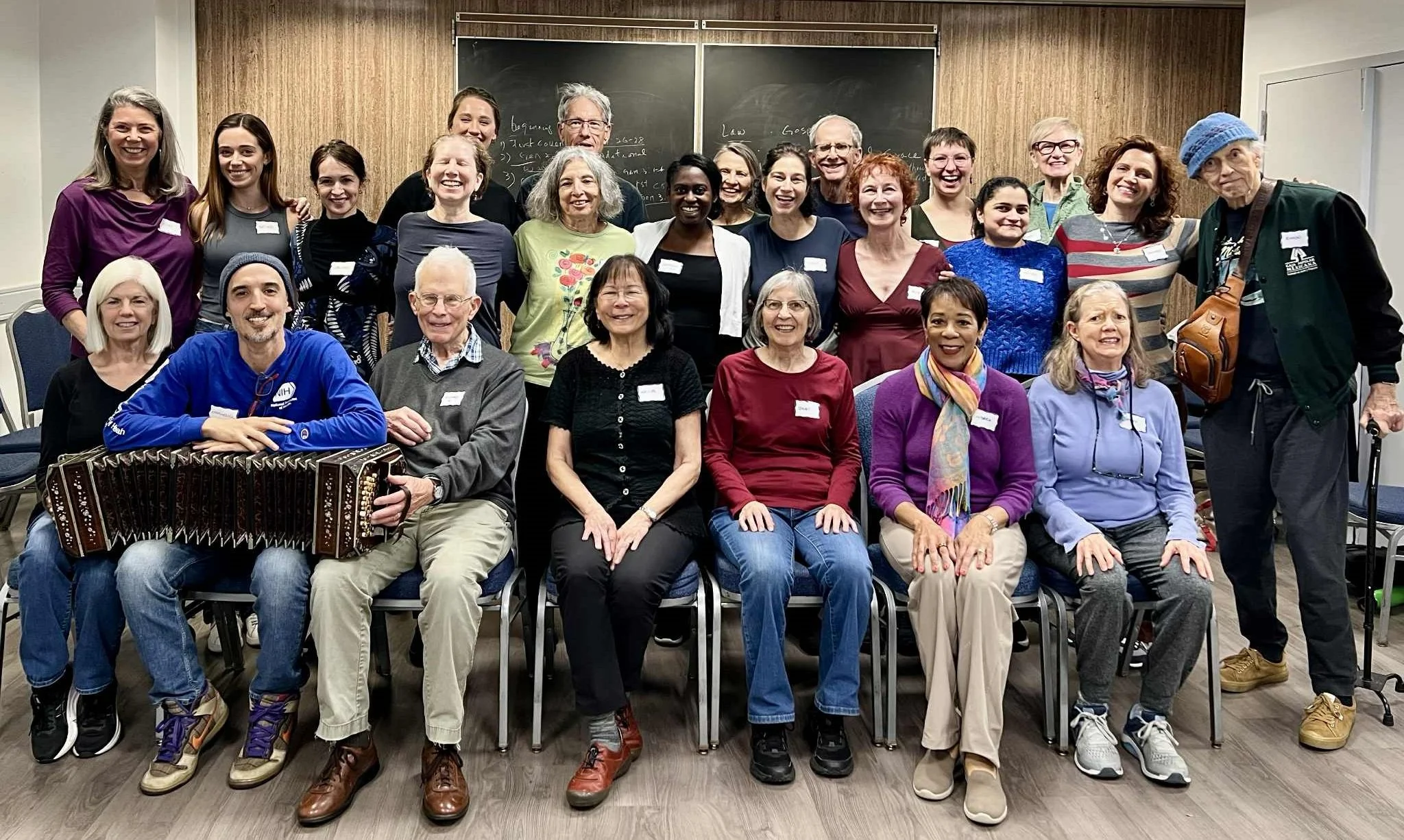
A key feature of the program is that Parkinson’s participants get one-on-one practice with a team of instructors and volunteer assistant instructors who’ve all been trained in Adapted Tango Group Classes for Older Individuals and those with Movement Disorders by neuroscientist and program developer Dr. Madeleine Hackney of Emory University. Eighty-three percent of participants to date cite the instructors as their favorite part of the program: “The volunteers were wonderful. They brought so much positive energy to the dance,” wrote one, and another cited the “friendly, encouraging environment.” Watch a short video with more testimonials here.
Each 1.5-hour class consists of a seated warm-up, standing exercises, learning a new move, rhythm exercises, dancing with different partners and switching lead-follow roles, music education, and socializing, with breaks as needed. We use a “practice embrace” in which partners hold elbows and maintain more distance than in traditional tango. The seated music education segment includes the history of tango music, dance, and lyrics, and one live music performance per Series.
All classes are free and open to people with Parkinson’s and other movement disorders and their caregivers, but enrollment is required: please register here. For more information, email info@tangomercurio.org. See upcoming class Series below.
2026 Spring and Summer - Adapted Tango Program Class Series
Series 3 for Beginners: June 3–July 8, 2026
We are offering a six-week Series of classes for Beginners starting on Wednesday, June 3, 2026. Classes are held Wednesdays from 10:30 am to 12:00 noon in the upstairs room at La Cosecha Latin Market at 1280 4th Street NE, Washington, DC, 20002, close to the MoMa-Gallaudet U Metro station. There is free parking for three hours in the building, an elevator to the upstairs level, and food and drink for sale downstairs.
Designed for participants new to dance and to Adapted Tango, this Series will introduce participants to the practice embrace, the basic tango walk forward and backward, side steps, rock steps, contrabody movement, walking outside your partner, simple combinations, and variations in rhythm. Watch a video of a typical class.
People who have already taken any of our previous class series may also enroll in this Series as a refresher. To enroll, please complete the online form by June 2, 2026.
Why Adapted Tango for Parkinson’s
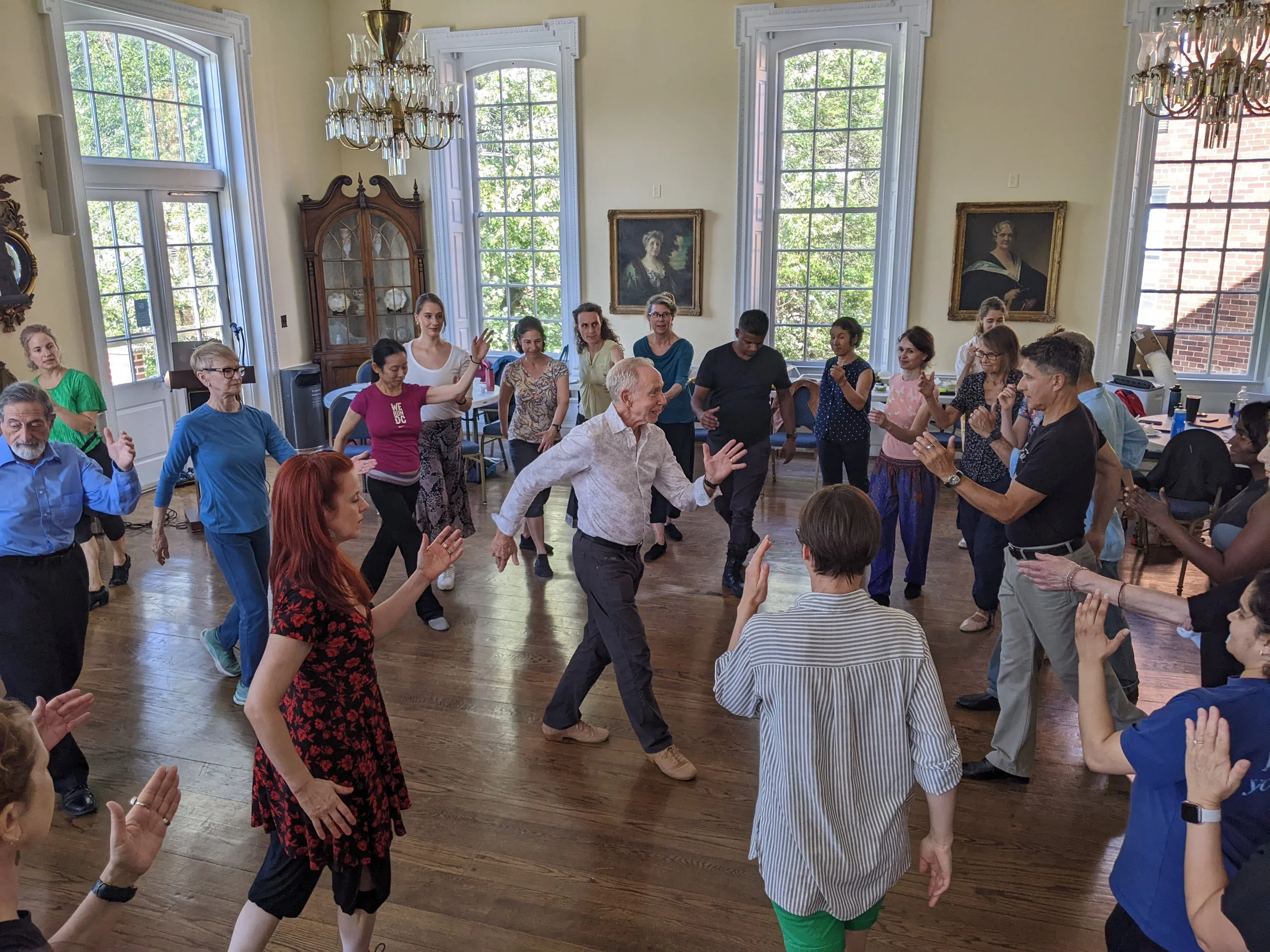
Photo Credit : Ramu Pyreddy
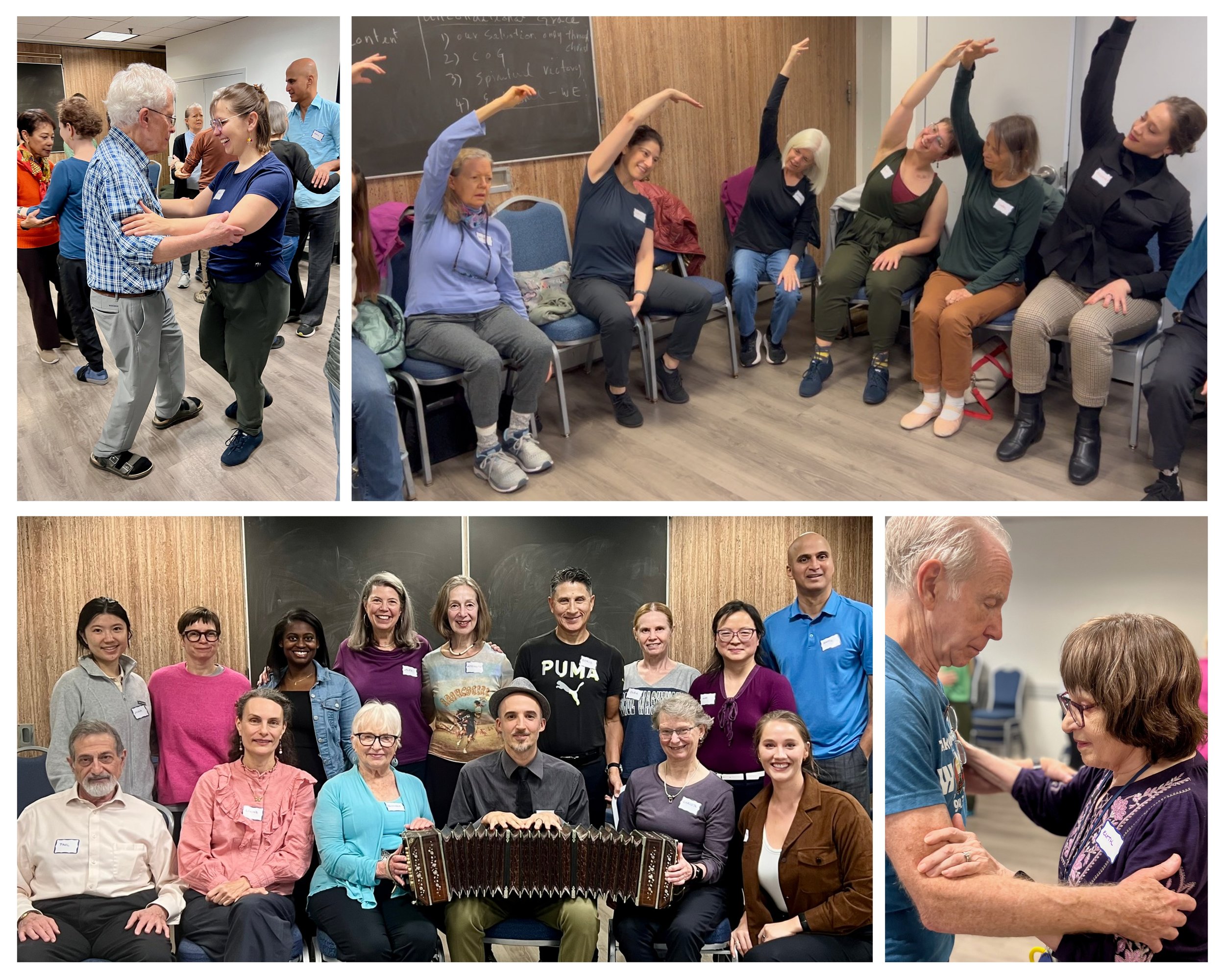
Photo Credits : S. Alexandra Russell, McKenna Emmerich
As a therapeutic tool, tango is a moderate-intensity activity that offers motivation and practice in numerous real-life skills that can be challenging for people with Parkinson’s and other conditions: walking forward and backward, initiating movement and stopping it, varying speed and rhythm, placing the foot and coordinating the whole body, navigating among others, sustaining attention, working with a partner and synchronizing movement with them, leading and following, and more.
In addition, tango offers a safe space for touch, social connection, and community, along with exposure to the dance, music, and poetry of a unique art form. It enables dancers of all abilities to enjoy moderate physical activity that helps them build new neural pathways and experience social interaction, which research has demonstrated boosts happiness and well-being.
According to the Parkinson’s Foundation, PD is the second most-common neurodegenerative disease after Alzheimer’s, affecting 1.1 million people in the U.S., with nearly 90,000 diagnosed every year. The disease causes motor and non-motor symptoms that can be physically, emotionally, and cognitively debilitating. There is no known cure, but physical activity can maintain and improve mobility, flexibility, and balance, and also ease non-motor PD symptoms such as depression.
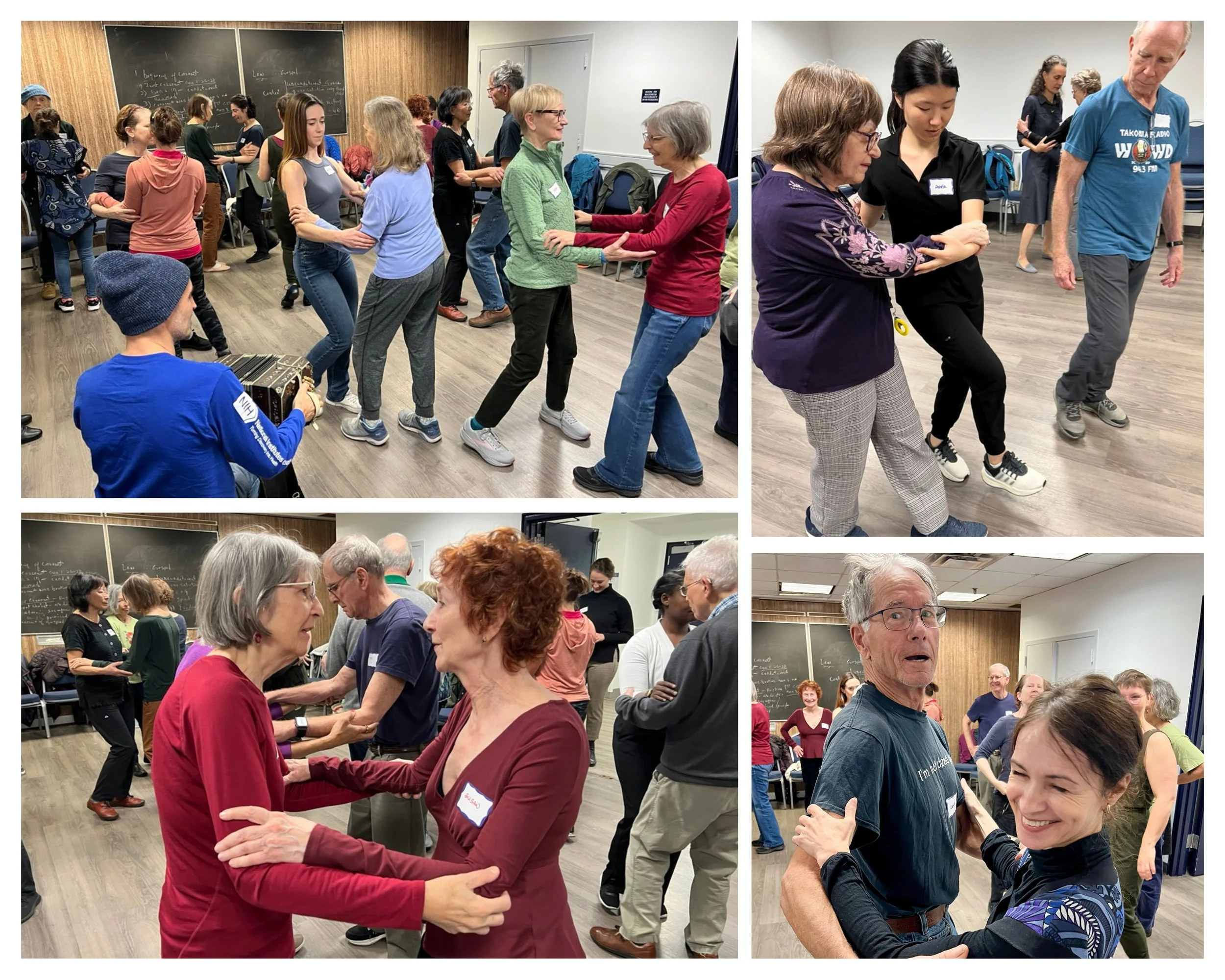
Photo Credits : S. Alexandra Russell, McKenna Emmerich
For more information and to sign up for our newsletter, email us at info@tangomercurio.org.
Our Program is partially funded by a generous grant from the DC Commission on the Arts and Humanities and the Bethesda-Chevy Chase Rotary Club, and the Retirees Association of the Inter-American Development Bank, along with many generous donations from individuals. Please help us make up the difference by contributing to our GoFundMe campaign—the more resources we have, the more classes we can offer—thank you for your support!
